How This Works for Weddings
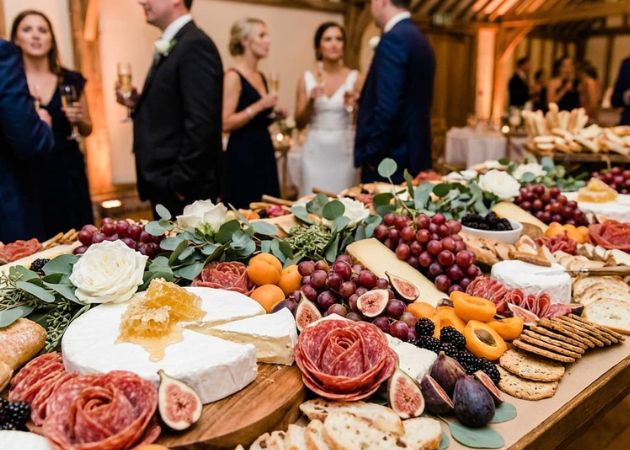
For a lot of weddings, a grazing table is the main cocktail-hour food — set in one spot where guests can circle through, snack, and keep mingling. It’s common for people to take a little, come back later, then grab something again once they’ve said hi to everyone. That steady grazing works better than a single “everyone lines up at once” moment.
Charcuterie boards fit in smaller pockets: a getting-ready suite, a side table near the bar, a quieter corner during the reception, or even a post-ceremony snack spread if guests are traveling between locations. Boards can also supplement passed apps, especially if cocktail hour runs long or the venue layout makes it hard to keep servers moving.
Dessert tends to land later. A dessert cart works well when you want one clear sweet spot guests can find after dinner (or when the dance floor is rolling and people are wandering again). Roaming cannoli is more interactive — it’s usually timed for later in the reception so it doesn’t compete with dinner service, and it works best when guests are already up and moving.
Layout, Timing & Planning Considerations
Cocktail hour space is the biggest factor. If the bar and the grazing table end up in the same pinch point, the room can bottleneck fast. A good setup spot is along a wall or the edge of the main mingling area, with enough clearance for people to approach, step away, and keep traffic moving.
Indoor venues have their own quirks: tight doorways, narrow hallways, small elevators, or a long walk from the loading area. Barns and older buildings can mean uneven floors and a lot of stairs. If the venue has a strict load-in window (or you only get access after the ceremony), that affects whether a full grazing table makes sense versus boards that can be staged quickly.
Outdoor weddings add weather and surfaces to the list. Sun and heat change how long food can comfortably sit out; wind can be a bigger problem than people expect, especially with lightweight items and décor. Covered patios, tents, and an indoor backup space make planning easier, even if the goal is “outdoors unless it’s awful.”
Dessert formats affect timing and placement differently. A dessert cart needs a flat, stable surface and a spot guests can find without blocking a doorway or dance floor. Roaming cannoli needs clear walking lanes — it doesn’t work well in a packed, shoulder-to-shoulder room or when staff are trying to run plates through the same space. For any format, parking proximity and a reasonable path from car to setup area makes a real difference on the day.
What Works Well / What to Expect
- Grazing tables tend to work best for cocktail hour when guests will be standing and circulating, not seated at assigned tables yet.
- Boards are useful when food needs to be split across spaces (bridal suite + bar area, or two rooms running at once).
- Dessert carts land well after dinner when guests are already moving around again — they’re less ideal during formal toasts.
- Roaming cannoli works best once the room has loosened up (dancing / open mingling), and it needs enough space to move without getting stuck.
- Outdoor setups go smoother with shade or coverage available, even if it’s just a backup plan.
How It Works
- Arrival window & access
Arrival is typically planned for 60–90 minutes before the first service moment (often cocktail hour), depending on size and venue access. If the venue only allows a short load-in window, that’s worked around upfront. Stairs, long carries, and tight hallways matter here, so those details help. - Setup & staging
Setup needs a cleared surface (or the venue’s table) and enough working room to build without guests squeezing past. For outdoor weddings, final placement may wait until closer to service time if sun, wind, or drizzle are in play. Dessert carts are usually staged off to the side until they’re ready to roll. - Peak guest time
During cocktail hour, guests serve themselves and come back as they want. If the window is longer, light touch-ups keep the spread balanced without hovering. Roaming cannoli is handled in a way that doesn’t interrupt dinner service or block staff pathways. - Breakdown & cleanup
Breakdown happens after the agreed window (for example, after cocktail hour ends or after dessert service wraps). Shared items are cleared, surfaces are wiped down, and the area is left tidy within venue guidelines. If access to the space changes later in the night, that’s planned for ahead of time.
Service Area
CG Boards mainly serves events within about a 30-mile radius of Londonderry, which usually covers most of Southern New Hampshire and the Merrimack Valley. That includes weddings in places like Windham, Salem, Pelham, Derry, Hudson, Methuen, Lawrence, Andover, North Andover, and Haverhill, plus spots like Dracut, Lowell, or Tewksbury, depending on the day’s schedule. If your venue is outside that core area, it may still be workable with an added travel fee. The simplest approach is to share the venue location early so travel and timing can be checked.
FAQs
Timeline drift happens all the time, especially with photos, transportation, or weather. A grazing table or boards can usually flex within a reasonable window, but it helps to know who will communicate changes (planner, venue coordinator, or a point person). If the shift is significant, placement might be adjusted so the food isn’t sitting out too early. For outdoor weddings, timing changes can also be used to avoid the hottest part of the day.
For cocktail hour setups, it’s best when the table is fully set before guests enter that area. If the venue layout means guests will see the setup in progress, boards can be a better fit because they can be placed quickly and staged in smaller pieces. A grazing table needs a bit more “build time,” so it depends on access windows and how the room is used. Sharing the venue’s schedule and when the space opens makes this easy to plan.
Portioning depends on guest count, how long cocktail hour is (45 minutes vs. 90 minutes changes a lot), and whether you’re also doing passed apps or a full dinner right after. Grazing tables are typically planned as cocktail-hour style grazing, not a full meal replacement, unless the wedding is intentionally doing “heavy apps” instead of dinner. Late-night dessert (dessert cart or roaming cannoli) is usually planned as a smaller, later wave when not every guest participates at once. Guest flow and timing matter just as much as the headcount.
A grazing table needs one solid footprint and enough space for guests to approach without creating a line that blocks the bar or entryway. Boards are more flexible — they can be split across rooms, moved more easily, and placed in tighter spaces like a suite or side table. If the venue has limited load-in time, lots of stairs, or a long walk from parking, boards can reduce setup pressure. Some weddings do both: a main grazing table plus a couple of boards in secondary spots.
Weather and surfaces are the big variables. Direct sun and high heat can shorten comfortable service time, while wind can be an issue even on a mild day (especially under open tents). A covered area or indoor backup spot makes it easier to keep timing predictable. If the ground is uneven, a cart setup needs extra care so it stays stable and safe.
Roaming cannoli tends to work best after dinner service is finished and the room is in “open” mode — dancing, chatting, people moving around. It’s not ideal during toasts or during active dinner service, because staff lanes get crowded. If the venue has a tight dance floor area, it helps to plan a route that keeps movement smooth. Timing is usually picked based on when the crowd is up and circulating again.
The big ones: where to park, how far the load-in is, whether there are stairs or an elevator, and when the space is available for setup. Some venues have strict “no early access” policies or only allow vendors in through specific doors. If the event space is upstairs in an older building, knowing the hallway width and stair situation prevents last-minute improvising. A quick note from the planner or venue coordinator usually covers most of this.
Before the rush, the goal is to have everything ready before guests hit the space — especially for cocktail hour. During the peak window, the service style is self-serve for boards/tables and guided/moving for roaming cannoli, so guests aren’t waiting in a long line. After the window, the plan depends on the timeline: some setups are cleared promptly for room flips, while others stay out longer if the venue allows it. Cleanup and breakdown timing is usually coordinated with the planner and venue, so it doesn’t interfere with the next part of the night.