Service Area and Delivery Info –
CG Boards & Co
CG Boards & Co. is based in Londonderry, NH. We deliver and set up across Southern New Hampshire and the Merrimack Valley, and most weeks we’re bouncing between a mix of homes, offices, and event venues that all have one thing in common: they’re real spaces with real constraints.
If you’re trying to figure out whether we can handle your town and your setup (wedding venue rules, tight timing, a conference room with zero counter space, a backyard tent that suddenly matters a lot because it’s windy), this page is meant to answer that without fluff.
We offer charcuterie boards, grazing tables, and a couple of dessert options—roaming cannoli and a dessert cart—depending on what you’re hosting and how you want the food to function at the event.
Where We Cater
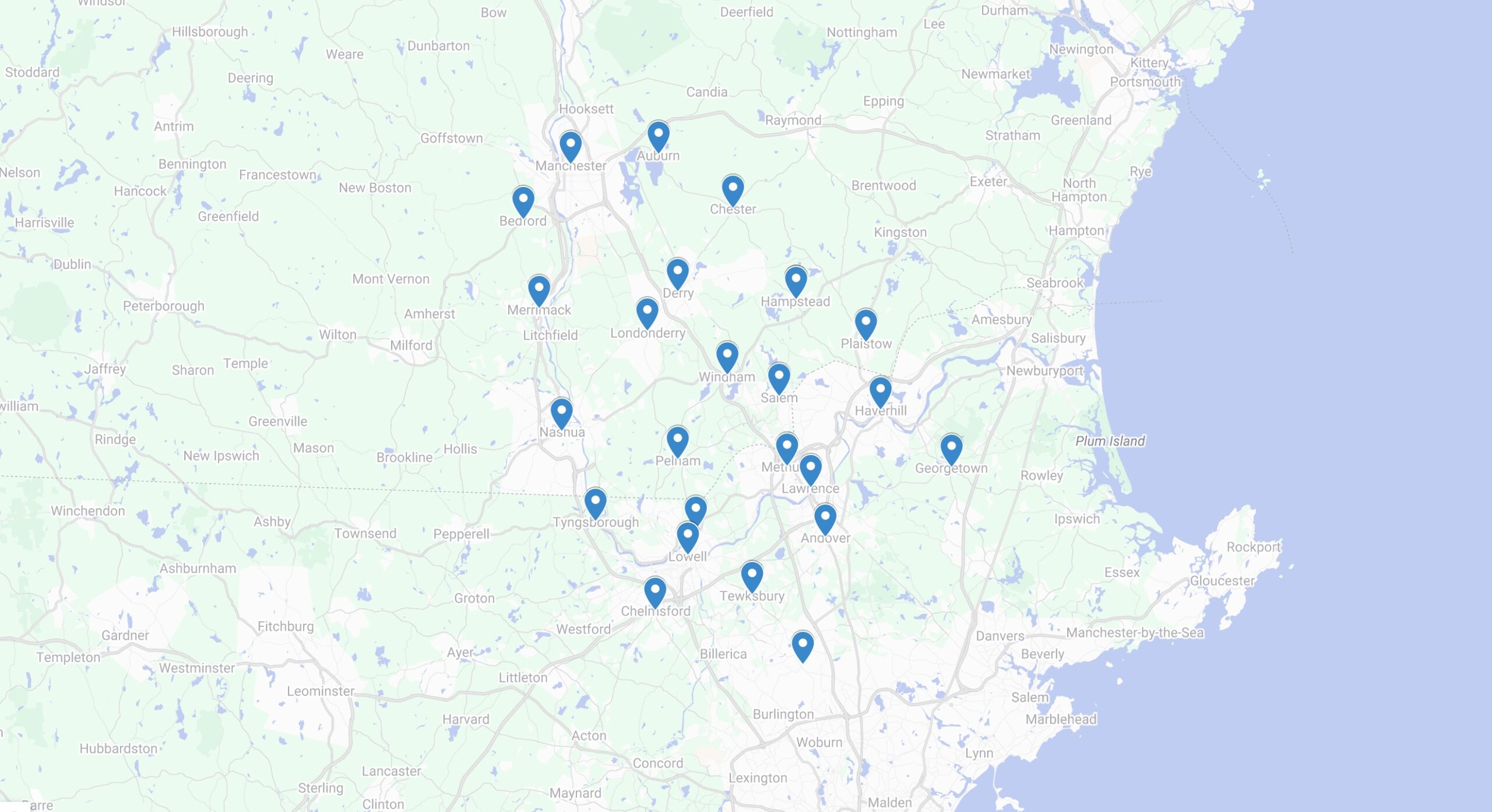
We usually stay within about 30 miles of Londonderry, which covers most of Southern NH and the Merrimack Valley. We handle all kinds of events across the towns below—weddings, office setups, showers, backyard parties, and everything in between. If you’re nearby but not listed, still reach out – we can try to accommodate everything that we can!
Southern NH
- Manchester, NH
- Nashua, NH
- Hudson, NH
- Londonderry, NH
- Derry, NH
- Windham, NH
- Salem, NH
- Pelham, NH
- Merrimack, NH
- Bedford, NH
Merrimack Valley (MA)
- Andover, MA
- North Andover, MA
- Methuen, MA
- Haverhill, MA
- Dracut, MA
- Lowell, MA
- Tewksbury, MA
- Lawrence, MA
- Wilmington, MA
- Georgetown, MA
- Tyngsborough, MA
Nearby Towns We Often Say Yes To
- Plaistow, NH
- Hooksett, NH
- Litchfield, NH
- Atkinson, NH
- Hampstead, NH
- Rye, NH
- Chelmsford, MA
The kinds of places we’re used to setting up
A lot of catering sites write as if every event is in a wide-open room with a perfect buffet table waiting. Around here, it’s more like: a barn venue with a tight load-in window, an office where the elevator requires a badge, or a house where the “table” is actually a kitchen island and two folding tables pushed together.
That’s fine. It just means the best events are the ones where we plan the little stuff up front—where the food goes, when we can arrive, and what the space looks like in real life.
Wedding venues and reception spaces
Wedding venues are usually smooth once we understand the rules and timing. We’ve worked in spaces like barns, inns, estates, and hotels—places where you might have a coordinator, a scheduled vendor entry time, and a specific spot where the food is allowed to live.
For weddings, the biggest win is syncing with the timeline. Cocktail hour is often the moment where food needs to be ready right when guests arrive, and venues can be strict about when vendors can enter, which door we can use, and where we can park. If you have a planner or venue contact, we’re happy to coordinate directly so you’re not playing telephone the week of your wedding.
Function halls and private event venues
Function rooms, community halls, clubhouses, and private event spaces can be surprisingly easy setups—provided we know what the room includes. Some places have the perfect long table and linens ready to go. Others are more “you get the room and the lights,” and everything else is on you.
We’ll ask the practical questions early (table size, when you have access, any restrictions) so event day doesn’t turn into a scavenger hunt.
Corporate offices and workplace events
Offices are less about the “type of food” and more about how the day flows. Sometimes you need something that lands quietly in a breakroom before a meeting ends. Other times, there’s a planned gathering where a grazing-style setup makes sense—so long as there’s a solid surface and a clear window to set up before people start hovering.
If the building has security, a loading dock, or parking quirks, that’s normal. We just want to know it ahead of time, so we’re not circling the block while everyone’s waiting.
Private homes and backyard tents
Home events are common around here, and they’re often the most relaxed—showers, birthdays, holiday parties, graduation get-togethers. Most of the time, we’re setting up on a kitchen island, dining table, or a provided folding table that becomes the “snack station.”
Backyard events are totally doable, but a little planning goes a long way. Shade matters. Wind matters. And having a simple backup plan (even if it’s just “we can move it inside if we need to”) saves stress.
Rentals and “borrowed” spaces
Weekend rentals and group houses come up a lot—especially around weddings and family events. The main thing with rentals is access: codes, check-in timing, and whether someone will be there to let us in.
We can absolutely work with these setups. We just want to avoid the “we’ll be there around 2” situation when nobody can open the door until 3.
What we offer across the service area
We’ll recommend the right fit, but here’s the simplest way to think about the options.
Charcuterie Boards
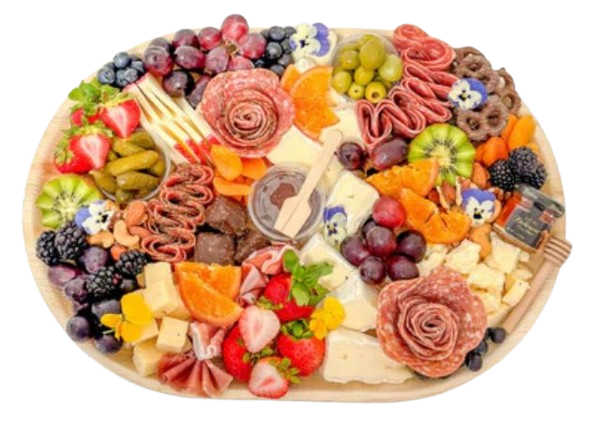
Boards are for when you want something easy, flexible, and genuinely good without needing a whole on-site setup. They’re great for smaller gatherings, add-ons to a party spread, office drop-offs, and the “we just need food handled” situations.
Grazing Tables
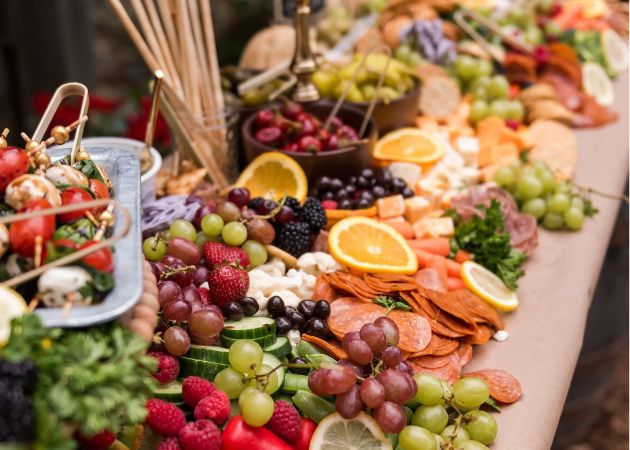
A grazing table is meant to feel like the center of the room—the thing people naturally wander over to, snack from, and come back to. They’re a great fit for showers, holiday parties, milestone birthdays, open-house style events, and wedding cocktail hours when you want food that looks great and functions well for mingling.
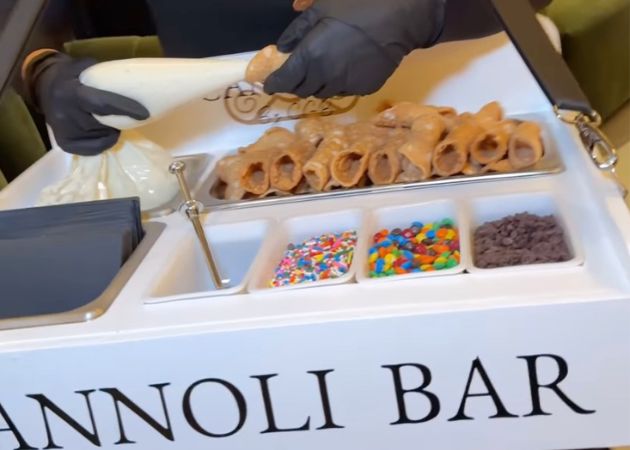
Roaming Cannoli
Roaming cannoli shines when the event isn’t “everyone lines up and gets dessert.” It’s best when guests are moving around—cocktail hour, office parties, open houses, backyard celebrations—because it keeps dessert fun and flowing instead of turning into a bottleneck.
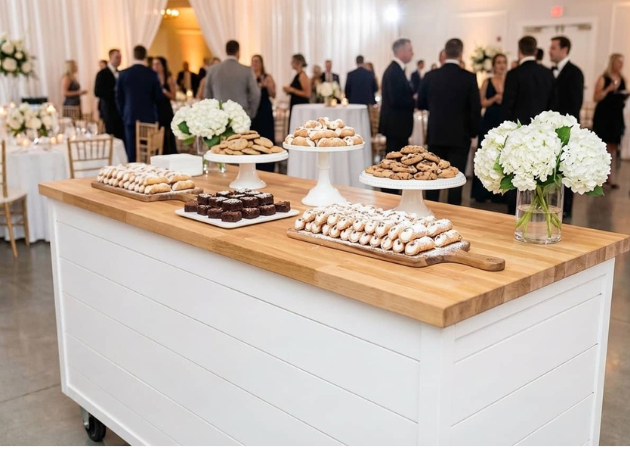
Mobile Dessert Cart
The dessert cart is for events where you want dessert to feel intentional—not just a tray that shows up at the end. Weddings, showers, milestones, corporate celebrations… it works well anywhere you have a good spot for it to live and enough room for guests to gather without blocking traffic.
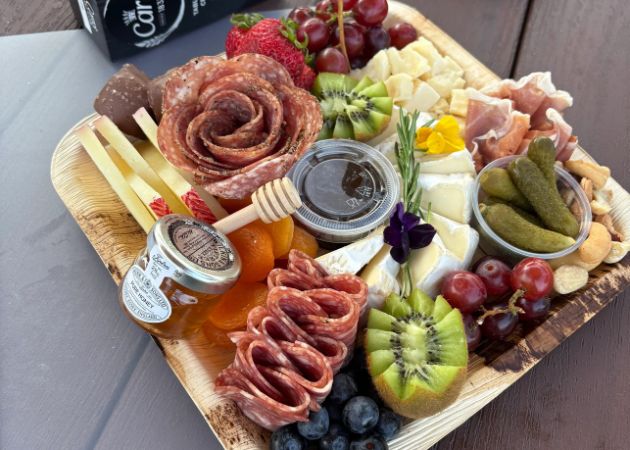
Charcuterie Workshops & Classes
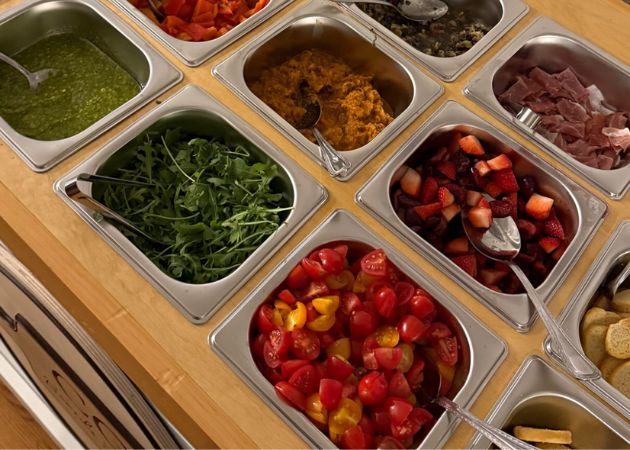
Burrata Cart
How delivery and setup works
Most of the “magic” is just planning. The goal is for your event day to feel easy.
We start with the basics: date, town, guest count, and where the food is going to be set up (home, office, venue, tent). If you don’t know everything yet, that’s okay—we can still give you a direction and tighten details later.
From there, we’ll recommend the format that actually fits your event. Not every party needs a full grazing table. Sometimes it’s boards plus one dessert piece. Sometimes it’s a grazing table for cocktail hour and a dessert cart later. We’ll steer you toward what makes sense without overcomplicating it.
Before event day, we confirm the small stuff that prevents day-of headaches—where we’re parking, how we’re getting in, what surface we’re using, and when we can arrive. If a quick photo of the setup table makes that easier, we’ll ask for one. It’s often the fastest way to avoid assumptions.
On event day, boards are typically a clean handoff (delivered and ready to serve). Grazing tables and carts are styled on-site. Either way, we aim to be calm and efficient—no taking over your kitchen, no turning setup into a production.
Picking the right option without guessing
If you’re torn between boards and a grazing table, the difference usually isn’t “which looks better.” It’s how you want the food to behave at the event.
If you want the simplest approach with the least on-site coordination, boards are usually the move. If you want people grazing for a longer stretch of time—and you want the food to feel like part of the party—then a grazing table fits better.
If your crowd is going to be mingling, roaming cannoli is the easiest “fun” add-on. And if you want dessert handled in a way that feels like a moment, the dessert cart is the cleanest option.
If you tell us your guest count, venue type, and the general flow (sit-down meal vs cocktail-style), we can recommend a setup quickly.
A few things that matter in real spaces
Here’s what we’re usually trying to learn upfront—not because it’s complicated, but because it helps everything run smoothly.
In multi-story buildings or downtown setups, we just want to know how we’re getting to the space (elevator vs stairs), where we can park briefly, and whether there’s security or a front desk check-in.
At wedding venues, timing and rules matter most: when vendors can enter, where setup can happen, and who we should coordinate with if you have a planner or coordinator.
In offices, it’s about matching the delivery/setup to the actual moment people will eat. “Lunch at 12” doesn’t always mean people are free at 12.
For outdoor or tented events, shade and wind are the two things that change everything. A simple backup plan is worth having, even if it’s just “we can move it inside.”
Dietary needs and allergies
We can usually accommodate common requests, but it helps to be clear about what’s a preference versus a strict allergy. If someone has a serious allergy, we want to talk through it carefully so we’re not making promises that aren’t realistic in a shared-kitchen, shared-ingredient world.
If you have dietary needs, just flag them early and tell us how many guests they apply to. We’ll recommend a menu approach that feels thoughtful without turning your event into a separate meal service.
How delivery and setup works
Most of the “magic” is just planning. The goal is for your event day to feel easy.
We start with the basics: date, town, guest count, and where the food is going to be set up (home, office, venue, tent). If you don’t know everything yet, that’s okay—we can still give you a direction and tighten details later.
From there, we’ll recommend the format that actually fits your event. Not every party needs a full grazing table. Sometimes it’s boards plus one dessert piece. Sometimes it’s a grazing table for cocktail hour and a dessert cart later. We’ll steer you toward what makes sense without overcomplicating it.
Before event day, we confirm the small stuff that prevents day-of headaches—where we’re parking, how we’re getting in, what surface we’re using, and when we can arrive. If a quick photo of the setup table makes that easier, we’ll ask for one. It’s often the fastest way to avoid assumptions.
On event day, boards are typically a clean handoff (delivered and ready to serve). Grazing tables and carts are styled on-site. Either way, we aim to be calm and efficient—no taking over your kitchen, no turning setup into a production.
FAQs
If you’re in Southern NH or the Merrimack Valley, yes — we’re based in Londonderry and those towns are regular runs for us. If you’re just outside the list, still reach out; the real deciding factors are usually your date, guest count, and timing, not whether you’re one town over. If travel or timing makes a full on-site setup awkward, we’ll tell you and recommend the option that fits best (often boards).
Yes — and venues are usually very smooth once we have the timeline and the venue’s rules. The only things that ever “complicate” weddings are access and timing (vendor entry window, where to park/load in, and whether the spread needs to be ready exactly at cocktail hour). If you have a planner or coordinator, we’re happy to coordinate directly so you’re not relaying details back and forth.
Absolutely, and boards are often the smartest choice when you want the easiest setup with the least day-of coordination. They work especially well for tighter setup windows (venues, offices, surprise parties) or when you don’t want to dedicate a whole table to food. If you tell us your guest count and how people will be eating (mingling vs seated), we can recommend the right mix so it still feels abundant.
It depends less on the size of the room and more on the surface you want us to build on — table length, shape, and where it sits in the traffic flow. Once we know your guest count and the table dimensions (or you can just send a quick photo), we’ll tell you what will look good and function well without creating a bottleneck. If your venue provides tables and you’re not sure what they are, we can work from the venue’s standard table sizes and adjust from there.
Yes — weekday office orders are common, and they’re usually easy once timing is realistic. “Lunch at 12” can mean people eat at 11:45 or 12:30, depending on meetings, so we’ll plan delivery around when folks will actually be ready. If there’s security, a front desk, or a specific entrance we need to use, we just want to know up front so it’s smooth.
Outdoor setups are totally doable, but shade and wind matter more than people expect. Shade keeps things comfortable for the food and prevents the “everything warms up too fast” problem, and wind affects where the spread should live and how it’s protected. If you’re tented, great; if not, we’ll help you pick the best spot and a simple backup plan in case the weather turns.